Your cart is empty
Tax included and shipping calculated at checkout

Drawer menu
Tax included and shipping calculated at checkout


Curlura is dedicated to helping you achieve healthier, more defined curls with premium hair care essentials. From nourishing shampoos and hydrating conditioners to curl creams, styling gels, and treatments, every product is selected to hydrate, strengthen, and enhance your natural texture. We make it easy to build a curl routine that delivers beautiful, confident results every day.
Absolutely love these products! My curls have never looked better. The formula is lightweight yet nourishing, and the scent is divine. Highly recommend to anyone with natural curls.
Finally found a hair care line that understands my curls! The moisture retention is incredible and my hair feels so soft. This is now my go-to brand.
Game changer for my natural hair journey! The products are luxurious, effective, and made with quality ingredients. My curls are defined, bouncy, and healthy.


Clean, nourishing formulas that deliver beautiful results without harsh ingredients.
Natural Ingredients
Curl Definition
Deep Hydration
Lightweight Formula
Feature text 1
Feature text 2
Feature text 3
Feature text 4
Feature text 1
Feature text 2
Feature text 3
Feature text 4


Discover our most-loved curl care essentials, trusted by customers to hydrate, define, and strengthen every curl. Shop the favorites that deliver healthy, beautiful results with every use.
Our mission is to make curly hair care simple by providing quality products you can trust, along with helpful guidance to support your hair journey. Whether you're looking to reduce frizz, boost moisture, or enhance your natural texture, Curlura is here to help you achieve healthier, more beautiful curls every day.


If your curls always look weighed down, greasy at the roots but somehow still dry at the ends, or if products seem to "sit" on your hair instead of soaking in — you're not doing anything wrong. You just have low porosity hair, and you've probably been using the wrong products this entire time.
Low porosity is one of the most misunderstood curly hair traits out there, and it's the reason so many people cycle through expensive product after expensive product with zero results. Let's break down exactly what's happening, why regular curly hair products aren't working for your hair type, and which formulas will actually get absorbed instead of just sitting on top of your strands.
Hair porosity refers to how easily your hair's outer layer (the cuticle) allows moisture in and out. With low porosity hair, the cuticle scales lie flat and tightly compacted, which makes it genuinely difficult for water, oils, and product to penetrate the hair shaft. Instead, product tends to sit on the surface, building up rather than absorbing.
Most mainstream curly hair products are formulated for medium-to-high porosity hair — hair that readily absorbs moisture. That's exactly why they fail on low porosity strands:
Thick shea butters and heavy oils are often marketed as "ultra-moisturizing," but on low porosity hair, they just sit on the surface, creating a greasy, weighed-down feel without ever actually hydrating the strand.
Low porosity hair generally doesn't need extra protein — it already struggles to absorb moisture, and protein-heavy products can make strands feel even stiffer, straw-like, and harder to manage.
Because the cuticle lies so flat, cool water and room-temperature styling routines simply don't do enough to lift the cuticle and let product in — leading to that frustrating "product just sits there" feeling.
Look for products with water listed as the first ingredient, along with humectants like glycerin, honey, or aloe vera that pull moisture into the strand instead of sitting on top of it.
Use warm water when rinsing, apply steam treatments, or use a warm towel over your hair after applying leave-in conditioner. Heat gently lifts the cuticle, allowing moisture to actually absorb.
Because low porosity hair is so prone to build-up, a gentle clarifying shampoo once every 1–2 weeks helps remove residue so newer products can actually reach the strand.
Skip thick butters, waxes, and silicone-heavy stylers. They'll create the illusion of moisture while actually suffocating your strands and blocking real hydration.
Reserve protein treatments for occasional use, and always follow with a moisture-rich conditioner to keep strands flexible rather than brittle.
A sulfate-free clarifying shampoo removes buildup without over-stripping, giving your other products a clean surface to actually absorb into.
Look for a leave-in with water or aloe as the base ingredient and humectants like glycerin to draw moisture directly into the strand.
A lightweight gel formulated with glycerin or honey helps define curls without adding the heavy, greasy film that thicker creams leave behind.
A deep conditioning treatment designed to be used with heat (a warm towel, steamer, or hooded dryer) will absorb far more effectively than a cold, no-heat application.
Yes — heat damage, chemical treatments, and excessive manipulation can raise porosity over time by damaging the cuticle layer, so protecting your hair from unnecessary damage helps keep porosity naturally low and healthy.
Not necessarily. Often the issue isn't a lack of rich ingredients but poor absorption. Switching to lighter, water-based formulas applied with heat usually solves the dryness more effectively than adding heavier products.
A simple float test can help: drop a clean strand of hair in a glass of water. Hair that floats for several minutes usually indicates low porosity, while hair that sinks quickly often points to high porosity.
Low porosity hair isn't difficult — it's just specific. Once you understand that your strands need lightweight, water-based, heat-activated hydration instead of heavy, protein-rich products, everything about your routine gets easier. The right products, applied the right way, are the difference between curls that finally drink in moisture and curls that just look like they're wearing a raincoat.
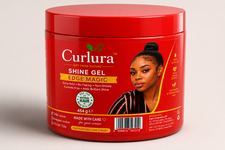


Nourishing essentials designed to hydrate, define, and bring out your curl’s true beauty.