Your cart is empty
Tax included and shipping calculated at checkout

Drawer menu
Tax included and shipping calculated at checkout


Curlura is dedicated to helping you achieve healthier, more defined curls with premium hair care essentials. From nourishing shampoos and hydrating conditioners to curl creams, styling gels, and treatments, every product is selected to hydrate, strengthen, and enhance your natural texture. We make it easy to build a curl routine that delivers beautiful, confident results every day.
Absolutely love these products! My curls have never looked better. The formula is lightweight yet nourishing, and the scent is divine. Highly recommend to anyone with natural curls.
Finally found a hair care line that understands my curls! The moisture retention is incredible and my hair feels so soft. This is now my go-to brand.
Game changer for my natural hair journey! The products are luxurious, effective, and made with quality ingredients. My curls are defined, bouncy, and healthy.


Clean, nourishing formulas that deliver beautiful results without harsh ingredients.
Natural Ingredients
Curl Definition
Deep Hydration
Lightweight Formula
Feature text 1
Feature text 2
Feature text 3
Feature text 4
Feature text 1
Feature text 2
Feature text 3
Feature text 4


Discover our most-loved curl care essentials, trusted by customers to hydrate, define, and strengthen every curl. Shop the favorites that deliver healthy, beautiful results with every use.
Our mission is to make curly hair care simple by providing quality products you can trust, along with helpful guidance to support your hair journey. Whether you're looking to reduce frizz, boost moisture, or enhance your natural texture, Curlura is here to help you achieve healthier, more beautiful curls every day.


Not all curls are created equal — and if you've ever wondered why the "best curly hair product" everyone raves about did absolutely nothing for your hair, the answer usually comes down to one thing: curl type. Understanding whether you have 3A, 3B, or 3C curls is the single most important step toward finally building a routine (and a shopping list) that actually works for your texture.
Grab a mirror and a little patience — by the end of this guide, you'll know exactly where your curls fall on the spectrum, and which curly hair products deserve a permanent spot in your shower.
The curl typing system (1 through 4, with sub-categories A, B, and C) was popularized to help people identify their natural texture, ranging from straight (Type 1) to tightly coiled (Type 4). Type 3 sits right in the middle of the curl world — springy, well-defined curls that range from loose loops to tight corkscrews. That's where 3A, 3B, and 3C come in, each with its own personality, needs, and ideal product textures.
3A curls form large, loose spirals about the width of a piece of sidewalk chalk. They have a shiny, well-defined S-pattern and tend to have the most natural shine of the Type 3 family, thanks to natural oils traveling more easily down looser curls.
3A curls are prone to falling flat or losing their curl pattern by midday, especially in humidity or with heavy products. Volume loss and slight frizz at the roots are the most common frustrations.
Lightweight, buildable formulas are key. Look for a lightweight curl-defining mousse or light-hold gel that won't weigh curls down, along with a volumizing, sulfate-free shampoo to keep roots lifted. Heavy butters and creams are usually too rich for this texture and can cause curls to droop.
3B curls are tighter, springier ringlets about the width of a marker, with noticeably more volume and bounce than 3A. This texture often has a mix of curl widths within the same head of hair, creating natural texture and body.
3B hair tends to run drier than 3A because natural oils have a harder time coating each tight ringlet. Frizz, shrinkage, and moisture loss are the biggest hurdles here.
This texture thrives with a rich, moisturizing leave-in conditioner and a medium-hold curl defining cream to lock in the curl pattern without stripping bounce. A weekly deep conditioning hair mask is a game-changer for keeping 3B curls hydrated and clump-y instead of frizzy.
3C curls are tight, densely-packed corkscrews about the width of a pencil or drinking straw, often with dramatic volume and a texture that borders on coily. This is the tightest curl pattern in the Type 3 family.
Because the curls are so tightly coiled and densely packed, 3C hair is the most prone to dryness, shrinkage, and frizz of the three types. Detangling can also be more time-consuming due to the density.
This texture wants intense hydration and hold. Reach for a heavier curl-defining butter cream, a hydrating leave-in with slip for detangling, and don't skip the sealing oil step to lock moisture in. A strong-hold, non-crunchy gel also helps 3C curls hold their shape through humidity and sleep.
Product buildup and old styling residue can disguise your natural pattern, so the most accurate read comes right after a cleanse, before you apply anything else.
Curl pattern is easiest to identify once hair is 100% dry and untouched — no scrunching, no touching, just natural air drying.
Take one isolated curl (not a clump) and compare its width and shape: sidewalk chalk (3A), a marker (3B), or a pencil/straw (3C). Most people actually have a mix of two types throughout their head — and that's completely normal.
Curl type tells you the shape of your curl, but two other factors determine how your hair actually behaves:
Combining your curl type with your porosity and density is what separates a "good enough" routine from one that makes your curls look genuinely incredible.
Yes — most people have at least two curl patterns across their head, often looser at the crown and tighter at the nape. Shop and style for your most dominant pattern.
Curl pattern can shift due to hormones, damage, or even how you cut your hair. It's worth re-checking your type every year or so, especially after big life or hair changes.
3C sits right at the border — it's the tightest curl in the Type 3 family and the closest to Type 4 coily hair, which is why it often needs richer, more intensive hydration than 3A or 3B.
Whether you're bouncing through the world with 3A ringlets, springing through your day with voluminous 3B curls, or rocking dense, dramatic 3C corkscrews, the secret to your best hair days isn't a mystery — it's knowledge. Once you know your curl type, shopping for products stops being a guessing game and starts being a strategy.
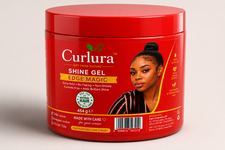


Nourishing essentials designed to hydrate, define, and bring out your curl’s true beauty.